A cooking robot can follow a recipe in a fixed setup. A useful kitchen robot must also deal with hot pans, wet ingredients, crowded worktops, and food that changes shape while it cooks. That is the gap future systems need to close.
- Good cooking needs control of heat, force, and timing.
- A fixed recipe is easier than a busy kitchen.
- Buyers need measured results, not a polished demo.
The hard part is the kitchen
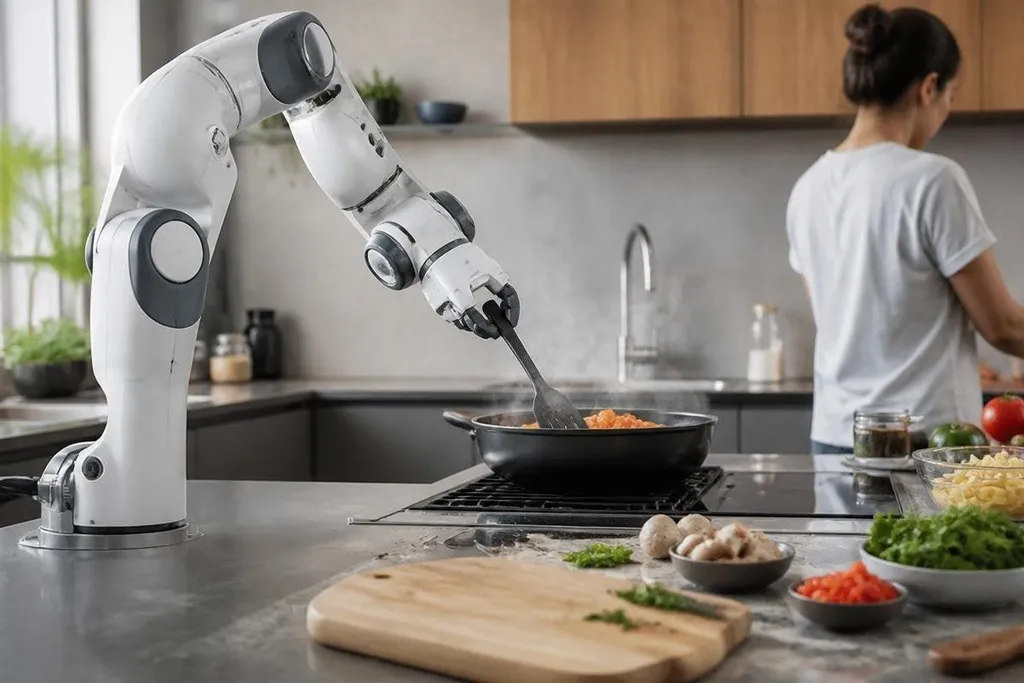
Cooking gives robots several problems at once. A robot arm may need to hold a pan, move a spoon, read a temperature, and avoid a person reaching across the same worktop.
The objects also vary. One tomato may be firm while another is soft. Dough can stick to a surface. A sauce can thicken during the same task. These changes matter because a robot cannot rely on one fixed grip or one exact movement.
Heat adds another limit. A system that works beside a cold preparation table may need different parts near a hot plate, oven, or steam source. Its sensors must keep working when visibility drops and surfaces become wet.
That makes cooking different from moving sealed boxes. The robot must sense the food, adjust its movement, and check the result as the task runs.
What the next systems should do
The useful change will come from better feedback, not from a larger arm. Cameras can check shape and position. Force sensors can show when a utensil meets a hard surface or soft food. Temperature sensors can tell the control system when a pan or ingredient reaches the needed range.
The robot also needs a way to recover. If a spoon slips, an ingredient rolls away, or a drawer blocks the planned path, the system should stop safely and ask for help. A clean restart matters more than a perfect first attempt.
Cooking speed needs care, too. A robot that repeats one action quickly may still slow the whole meal if a person must reset it after each mistake. The useful measure is the completed dish, including setup, cleaning, pauses, and failed actions.
A completed dish gives cooking automation a fair test, but the report still needs the machine and the task setting. Cooking robot reports from Robot24.com can show whether the robot handled the full meal or only the easy part shown on camera. That difference matters when the demo starts.
The demo is not the meal
A short video can show a robot stirring, placing food on a plate, or opening a cupboard. That proves the robot performed one sequence under those recorded conditions. It does not show how the system handles a new ingredient, a changed tool position, or a task that runs for an hour.
A useful test should show the full cycle. That means loading ingredients, preparing the work area, cooking, serving, cleaning, and stopping when a person enters the operating space.
The operator’s role should also be clear. A system guided by a person at every step is a different product from one that runs a recipe on its own.
The unproven part is repeatability. A kitchen buyer needs results across different ingredients and several runs, not one plate that looks correct at the end of a video.
What to check before buying
Use this checklist when a cooking robot moves from a video to a real purchase:
- Task boundary: Write down the exact recipe steps the robot does and the steps a person still handles.
- Heat limits: Ask for the allowed temperatures, nearby equipment, and sensor limits.
- Food changes: Test soft, sticky, wet, and irregular ingredients that match the planned menu.
- Recovery plan: Check what happens after a dropped tool, blocked drawer, or failed grasp.
- Cleaning work: Count the parts a person must remove, wash, dry, and replace after each run.
- Measured output: Ask for completed dishes per hour, failed runs, operator time, and power use.
Those details turn a broad promise into a job description. They also show where a simpler machine, such as an automated cooker or ingredient dispenser, may fit better than a general-purpose arm.
I’d judge a cooking robot by the number of meals it completes without rescue, not by how smoothly one motion looks on video.
The next useful proof is a long, uncut kitchen run with changing ingredients, a visible operator role, and the full cleaning cycle included.