A successful bulk asphalt paving project is defined by its longevity, smoothness, and resilience. Cutting corners during planning or execution leads to premature cracking, drainage issues, and costly repairs. For developers, municipalities, and property managers in Utah, executing a flawless project requires a methodical approach tailored to the state’s unique environmental challenges.
This guide provides a comprehensive, step-by-step blueprint for bulk asphalt paving. We will move beyond generic advice to detail the specific actions, from initial site evaluation to final compaction, that ensure a durable and high-performance result. The process integrates modern materials science with proven construction techniques, adapted for the thermal extremes and soil conditions common across Utah. Following this structured plan mitigates risk, controls costs, and delivers a pavement asset built to last.
Project Planning and Pre-Construction Evaluation
The foundation of a flawless paving job is laid long before the first truck arrives. Comprehensive planning prevents the most common and expensive failures.
Conducting a Thorough Site Assessment
Begin with a professional geotechnical survey of the subgrade—the native soil that will support the pavement. In Utah, soil composition varies dramatically, from expansive clay in some valleys to sandy, poorly-draining soils in others. The assessment determines the soil’s bearing capacity (CBR value) and identifies any areas requiring stabilization or removal. Simultaneously, execute a detailed topographic survey to establish precise grading plans and drainage slopes. Proper water runoff is non-negotiable; standing water is asphalt’s primary enemy, leading to base failure and freeze-thaw damage in winter.
Material Specification and Mix Design
Asphalt is not a single product. For bulk paving, the specific mix design is critical. Work with your supplier to specify a mix suitable for the project’s traffic load (e.g., PG 64-22 or PG 76-22 for high-traffic areas) and Utah’s climate. The Performance Grade (PG) system denotes the temperature range the binder can withstand. Given Utah’s hot summers and cold winters, the binder must resist both rutting and thermal cracking. Agree on aggregate type, size, and asphalt content. Document these specifications and ensure your asphalt paving Utah contractor has a verified supply chain to deliver consistent, quality material to the site.
Subgrade Preparation and Base Installation
A perfect asphalt surface is impossible without a stable, properly constructed foundation. This phase demands meticulous attention.
First, proof-roll the subgrade. A heavy vibratory roller or loaded dump truck is driven over the compacted soil to reveal soft spots. These areas must be excavated, backfilled with suitable material (often engineered fill or aggregate base), and re-compacted in lifts of no more than 8 inches. Uniform density is the goal.
Next, install the aggregate base course. This layer, typically 4 to 8 inches of crushed aggregate, distributes loads and provides essential drainage. Spread the material in even layers and compact it to at least 95% of its maximum density (as per Proctor test). Use a laser grader to establish the final base profile, ensuring it matches the design cross-slope—usually a minimum of 2% for positive drainage. A poorly graded base will telegraph every imperfection to the surface layer.
The Paving Operation: Execution and Quality Control
This is the critical phase where planning meets practice. Coordination and constant vigilance are required.
Managing the Asphalt Delivery and Placement
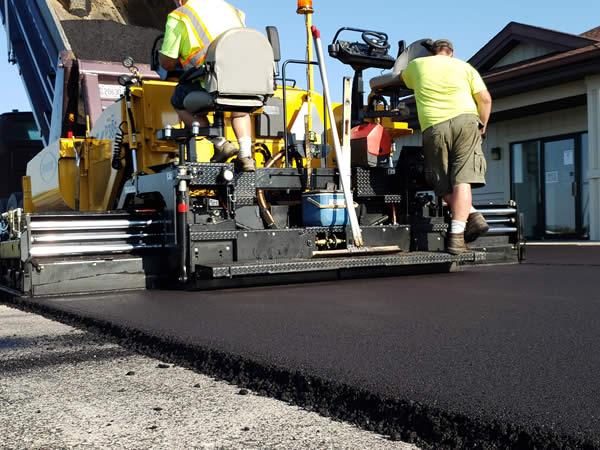
Establish a clear schedule for truck deliveries to maintain a consistent, uninterrupted supply of hot mix asphalt (HMA) to the paver. The HMA must arrive at the site between 280°F and 320°F. A material transfer vehicle (MTV) is highly recommended; it remixes the asphalt, preventing segregation of aggregates and maintaining an even temperature before it enters the paver’s hopper. The paver should operate at a steady, slow speed, with its screed floating on the hot material to create a smooth mat. Avoid stopping the paver, as this creates indentations.
Real-Time Monitoring and Adjustments
A skilled crew must constantly monitor several variables. Check the asphalt temperature behind the screed. If it drops below 250°F before rolling, proper compaction becomes difficult. Monitor the depth of the mat using a gauge; inconsistencies here lead to uneven thickness and premature wear. The joint between old and new pavement or between daily work sections requires special attention. It should be cut straight and vertical, heated with a joint heater, and fresh hot mix should be placed directly against it to ensure a seamless, strong bond.
Compaction and Density Achievement
Compaction transforms the laid asphalt from a loose aggregate mix into a dense, impermeable, strong pavement layer. Achieving target density is the single most important factor for longevity.
The process uses three types of rollers in sequence. A breakdown roller (typically a vibratory steel-wheel roller) follows closely behind the paver, while the mix is still above 250°F, to achieve initial density and remove air voids. An intermediate roller (often a pneumatic tire roller) kneads the mat, further densifying it and sealing the surface. The finish roller (a static steel-wheel roller) removes any roller marks and provides a smooth final texture. The goal is to reach 92% to 96% of the theoretical maximum density, as measured by a nuclear density gauge on site. Inadequate compaction leads to accelerated oxidation, moisture infiltration, and raveling.
Post-Installation Procedures and Long-Term Care
The project is not complete when the rollers leave. Final steps protect the investment and set the stage for the pavement’s service life.
Allow the new asphalt to cool completely before opening to traffic—typically 24 to 48 hours, depending on ambient temperature and lift thickness. Immediately after cooling, perform a final inspection. Check for surface irregularities, proper drainage, and smooth transitions. Then, apply a high-quality asphalt sealcoat after the pavement has fully cured, which usually takes 30 to 90 days. This sealant protects the surface from fuel, oil, and UV oxidation. Implementing a routine maintenance schedule is crucial. This includes crack sealing within the first year and regularly thereafter, periodic re-sealing every 3-5 years, and prompt patching of any distressed areas. Partnering with experienced Utah asphalt paving contractors for maintenance ensures continuity and expert care.
Frequently Asked Questions
What is the best time of year for bulk asphalt paving in Utah?
The ideal window is typically late spring through early fall, when daytime temperatures are consistently above 50°F and rising. Asphalt requires heat to remain workable and achieve proper compaction. Paving in cold or wet conditions results in poor density, premature cracking, and a shortened lifespan for the pavement.
How thick should a bulk asphalt pavement be?
Thickness depends entirely on the subgrade strength and intended use. For a standard parking lot with a good aggregate base, a total thickness of 3-4 inches is common. For heavy truck traffic or industrial areas, thickness can exceed 6 inches, often in multiple layers (a binder course and a surface course). Your engineer should specify thickness based on the site assessment.
How long does new asphalt need to cure before use?
For light vehicle traffic, a minimum of 24-48 hours of cooling is required. For full cure—where the asphalt reaches its maximum hardness and strength—plan for 6 to 12 months. Avoid sharp turns or heavy truck traffic on the new surface for the first few weeks to prevent scuffing and deformation.
Can asphalt be paved over an existing concrete surface?
Yes, but it requires specific preparation. The concrete must be thoroughly cleaned, and all cracks and joints must be sealed to prevent reflective cracking. A stress-absorbing membrane interlayer (SAMI) or a thick layer of asphalt (often 4+ inches) is usually recommended to mitigate the rigid concrete movement from affecting the flexible asphalt overlay.
Why is compaction so critical in asphalt paving?
Compaction removes air voids from the asphalt mix. If too many air voids remain (low density), the pavement becomes permeable. Water and air infiltrate, leading to binder oxidation, moisture damage in freeze-thaw cycles, and rapid raveling of the surface. Proper compaction creates a dense, waterproof, and durable surface.
What causes asphalt to crack, and how can it be prevented?
Cracking has several causes: thermal contraction in cold weather, reflective cracks from a failed base, shrinkage cracks from binder aging, and fatigue cracks from overloading. Prevention starts with the steps in this blueprint: a stable subgrade, proper drainage, the right mix design, achieving target density during installation, and implementing a proactive crack-sealing maintenance program.
Conclusion
Executing a flawless bulk asphalt paving project is a disciplined sequence of interdependent steps, each one building upon the last. From the initial geotechnical investigation and precise material specification to the critical phases of base preparation, controlled placement, and diligent compaction, success hinges on rigorous attention to detail. In Utah’s demanding climate, this structured approach is not optional; it is essential for engineering a pavement system that can withstand thermal stress, heavy loads, and the passage of time.
This step-by-step blueprint provides the framework for that success. By viewing the project as an integrated system—where the quality of the subgrade dictates the performance of the surface—owners and project managers can oversee work with informed confidence. The result is more than a new black surface; it is a long-term, low-maintenance asset that delivers safety, functionality, and value for decades.